In part two of our series on England’s World Championships performances over the years, Diane Webb (Chair of Archives, Museum and Records Committee) looks at the second Championships in Stockholm in 1928.
Keep an eye on our website and social media platforms for a host of features in our Road to London 2026 series – and click below to secure your tickets for London 2026.
After the success of the first World Championships, plans were immediately under way to prepare for the second which were held in Stockholm in the middle of winter.
There were five individual events – Men’s Singles, Ladies’ Singles, Men’s Doubles, Women’s Doubles and Mixed Doubles. The team event was for men only with nine countries taking part, heavily dominated by Europe.
The England team was Charles Allwright, Charles Bull, Adrian Haydon, Charles Mase and Fred Perry with Ivor Montagu as the Non-Playing Captain. Allwright was the only survivor from the England team of 1926.
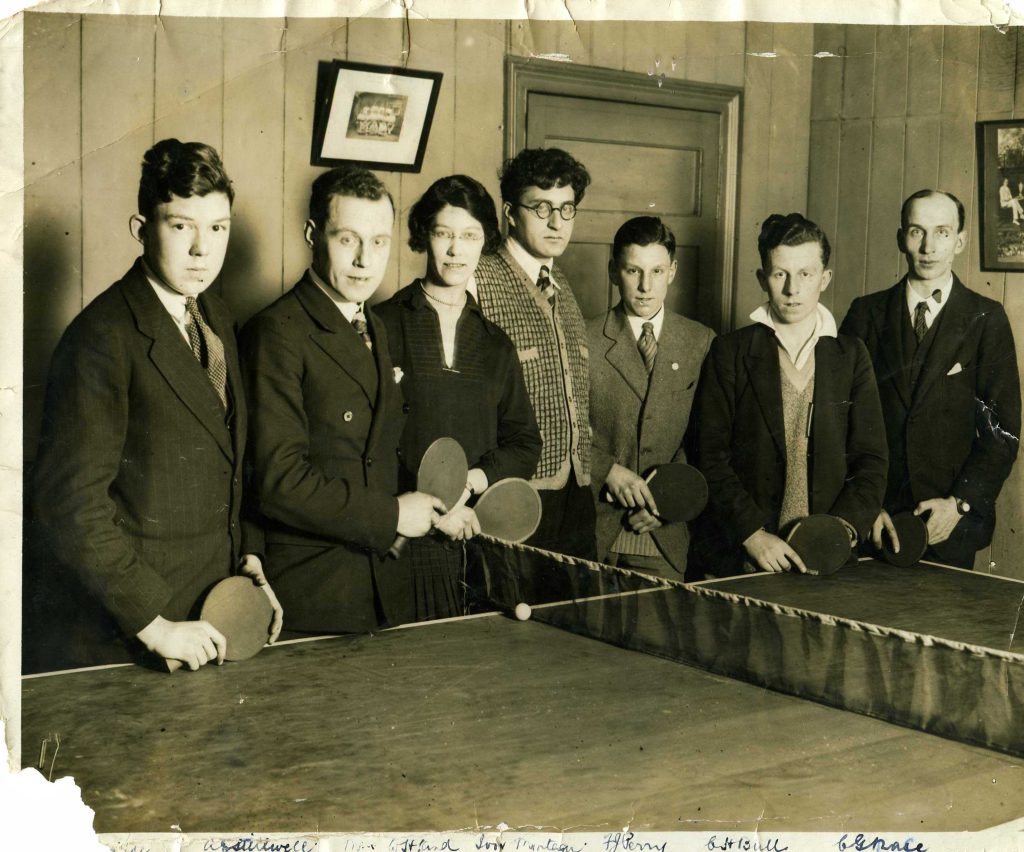
England’s men started well with two wins in the team event which began on 24 January, beating Czechoslovakia 5-2 and Hungary 7-2. The next day it was more success over Latvia (5-4), Germany (8-0) and Sweden (5-0). The third day was an initial defeat against Austria (4-5) before two victories over Wales (5-1) and All India (8-0).
This resulted in two play-off matches in a three-way final tie against Austria and Hungary. It was not to be for England, who went down 2-5 in both fixtures. Bull won the two matches against Hungary and Haydon the two against Austria. Hungary beat Austria by 5-2 to take the title, leaving Austria in second place. Final results for the players: Allwright 6-5, Bull 19-6, Haydon 9-7, Mase 3-3, Perry 14-3.
The individual events followed the team matches and in the Men’s Singles there were 58 players. As well as the England team, several other Englishmen travelled to Stockholm. Frank Wilde, Bernard Hookins and Teddy Stillwell took part, as did Montagu. Bill Pope was there too but scratched from this event, but did play in the doubles.
There were no medals for England, although Haydon and Perry reached the quarter-finals, losing to Paul Flussman of Austria 16, -16, 12, 18 and Lazlo Bellak of Hungary 7, 19, 16 respectively. The two young English players showed immense promise.
Allwright reached the round of 16, Mase and Wilde the round of 32 and Bull, Hookins, Montagu and Stillwell went out in the first round of 64. Zoltan Mechlovits of Hungary became the new champion, bettering his runners-up spot in 1926, with a win over Bellak -8, -18, 22, 12, 15.
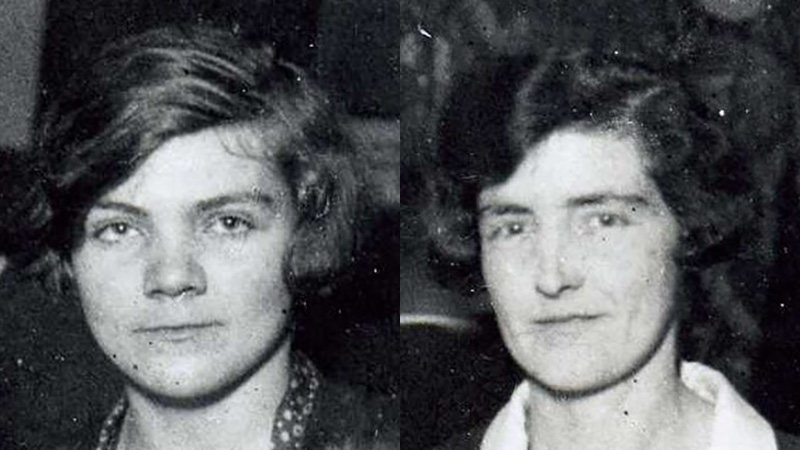
The Ladies’ Singles had 16 entries and it was England’s Joan Ingram, Winifred Land and Brenda Somerville who ventured to Scandinavia. It was a bronze medal for Ingram, who lost narrowly to the eventual champion and holder Maria von Mednyanszky of Hungary 20, 17, 16.
Land and Somerville went out in the first round both in close matches. Land, like Ingram, also lost to Mednyanszky 20, 19, -17, 18 and Somerville to Asta Fogel of Sweden 20, 19, -17, 18. Doris “Dolly” Gubbins of Wales was the other bronze medallist. The final was a second victory for Mednyanszky who beat Erika Metzger of Germany 19, 20, 13.
There was more success in the Men’s Doubles when Bull & Perry reached the final but lost to Austrians Alfred Liebster & Robert Thum 10, 13, 16. Allwright & Wilde were quarter-finalists whilst Haydon & Hookins reached the round of 16 which left Mase & Stillwell and Montagu & Pope going out in the first round of 32. Total entries 27.
It was the first time that the Ladies’ Doubles was played and it was small entry of six. All three English ladies came home with medals. Somerville teamed up with Wales’ Gubbins to earn a silver, losing to Mednyanszky & Fanchette Flamm of Austria 16, 21, 11. Ingram & Land lost to the eventual winners in the semi-final -20, 12, 16, 19.
The holders of the Mixed Doubles retained their title, Mechlovits & Mednyanszky beating Daniel Pesci of Hungary & Metzger in the final -19, 20, 16, 9. Perry & Land reached the semi-final but unfortunately had to scratch which left them with a bronze medal. Bull & Ingram also scratched in the quarter-finals while Wilde & Somerville went out in the first round. 12 pairs entered.
The tournament committee comprised Chairman Dr Carl Linde of Sweden, Ellak of Hungary, Flamm of Austria, Montagu of England, Rosenthal of Latvia, S Jeglic of Czechoslovakia, C Hallett of Wales and S Ismael of India. The number of member associations had increased by one to 10, all of whom were represented at the ITTF Congress.
Profiles of some of the intrepid participants
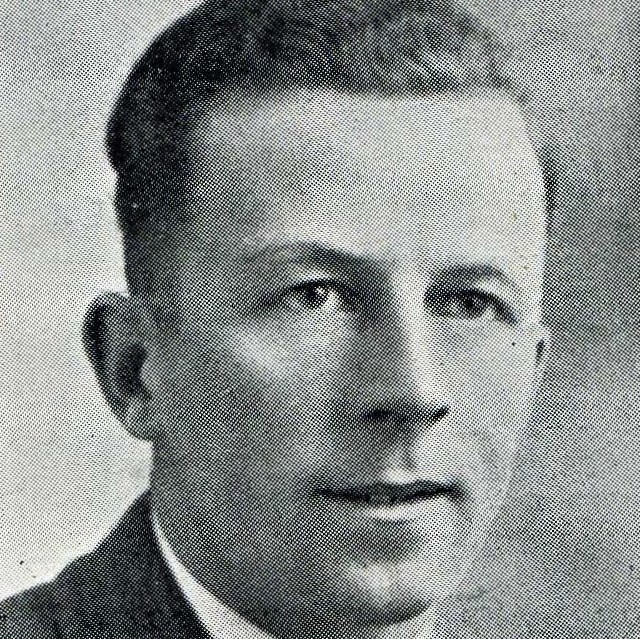
Charles Bull: Bull was 19 when he played in Stockholm, paying his own way as did all the players. He played in five World Championship, earning 27 caps and gained another four caps in internationals against Wales and the Irish Free State. He was ranked world No 5 in 1928. As well as playing table tennis for England, Bull was a cricketer, playing 175 first-class matches for Kent and Worcestershire, he also played football for Fulham reserves. Bull was killed in a car accident in Kent when he was 30.
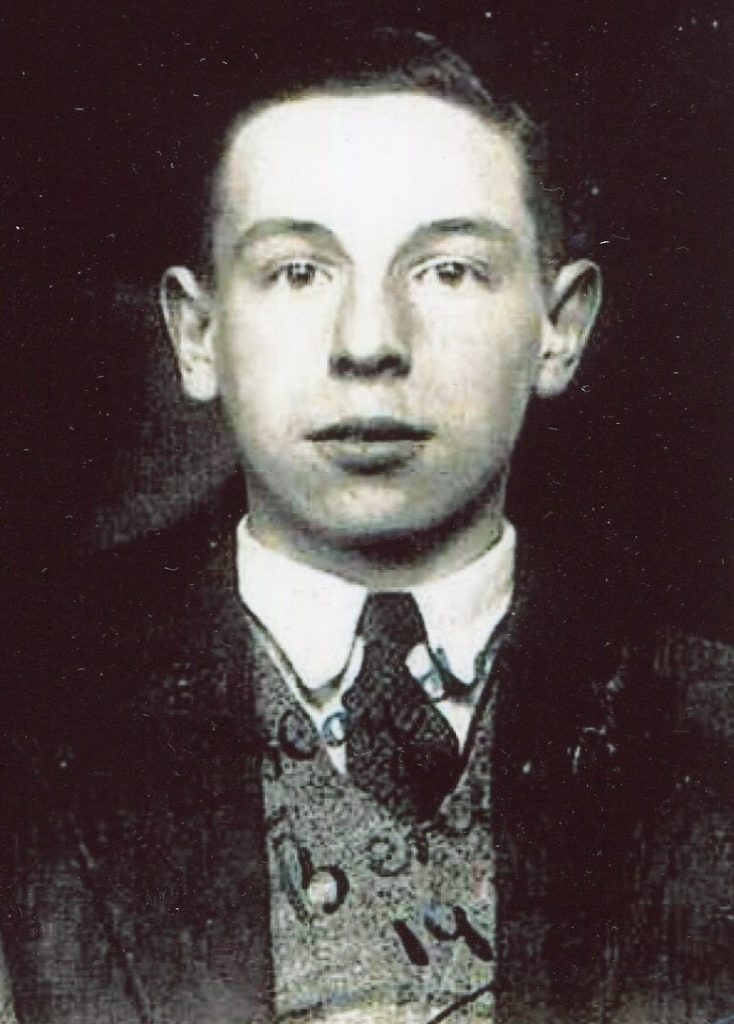
Adrian Haydon: Born in October 1911 in Birmingham, Haydon was only 16 years old when he played in Stockholm. He played in 17 World Championships with his last appearance in 1953, where his most impressive achievement was captaining the Swaythling Cup winning team. He was ranked one in England and four in the world in singles and one with Victor Barna in Men’s Doubles. Haydon played in many other internationals and open tournaments at home and abroad with considerable success.
Haydon’s sister, Marjorie, was also an international and he married Doris Jordan, who too played for England. Their daughter Ann carried on the tradition.
Ivor Montagu wrote about Haydon in Stockholm: It was just as he was about to play his first match abroad for England, at the Stockholm World Championships of 1928. There stood Adrian, a smallish schoolboy of 16, just awakened from sleep, waiting before an immense crowd in the Stockholm circus to tackle Zoltan Mechlovits, famed captain of the world-beating Hungarian Swaythling Cup team, champions of the previous year, himself the individual runner-up and destined to become the title-holder in singles later in the week. The match score was at a crucial point and it stood 1-1. Everything hinged on their third encounter.
Mechlovits, a massive figure and a master of gamesmanship, tried everything he knew – well, I will not say to unsettle the nerves of his diminutive opponent but, at any rate, to steady his own. First he had the net measured – all along its length. Then – this I have never seen before – he had the height of the playing surface measured, from the floor. Throughout all this, Adrian just stood there. When at last the umpire called ‘Play’, Adrian at once set about playing a blinder. I do not even remember who won this terrific battle in the end, but it paved the way to a 7-2 victory. Years later, when we were on the selection committee together and somebody brought up the hoary old crack about not choosing so-and-so because, being so young, he could not be ‘ready yet’, I asked Adrian whether he, too, remembered that occasion and whether he had felt nervous. “Nervous?” he said. “I didn’t know there was anything in the world to be nervous about. I didn’t know there was anyone in the world who could beat me”.
I came to understand this better when I learned more about Adrian and his background. The story of how he swam into our ken is very interesting. England had lost the previous year, in the first world championships, but in any case so many old stalwarts fell out, that a new team had to be sent and we wrote at once to Frank Lawes, a lean and vigorous senior, sallow and handsome, with a cockatoo quiff of grey hair, who had been runner-up in the trials the previous year and consequent first reserve.
Lawes replied that he was too tied up by business to come but “there is a schoolboy up here who beats me hollow”. So, Adrian, button-top cap and all, came to the trials in London. He battered his way through, leaving a flattened array in his wake. A few weeks passed and he came to London again; it was a gathering of three international teams; England, Wales and India, the latter being in those days London-based. We were all to journey to Sweden together and, on the eve of departure, the trialists took part with all other top players available in the London Championships at the old Indian Students’ Hostel in Gower Street. This was Adrian’s first tournament ever and he was the winner.
This was before the days of regular air travel. To save money we were going on hard wooden seats. (The ETTA was poor then and players paid their own way). A terrible mix-up meant that the teams had no sleep on the last part of the journey, had to sit up all night on the hard seats, sang to keep its spirits up, and had to play directly on arrival. Adrian was sent straight to bed to sleep till evening when our Hungarian match was due and then we faced them, a team of five eventual world champions in singles and doubles, with, on our side, two I8-year-olds, (Fred Perry and Charlie Bull), the just awakened schoolboy and I, their non-playing captain, the 23-year-old ITTF President.

Charles Mase: One of the older members of the party who was born in Diss, Norfolk in 1895. Mase played in four World Championships with 1928 the only one in which he played for England. Not only a player, Mase was Secretary for the London Table Tennis League, Whitefield Institute and for the Home Counties Open, he was also a member of the World Championships Tournament Committee in 1926. It is reported he was deaf and dumb. Ivor Montagu says he was selected to play in Stockholm as “had a style that bothered players abroad”.
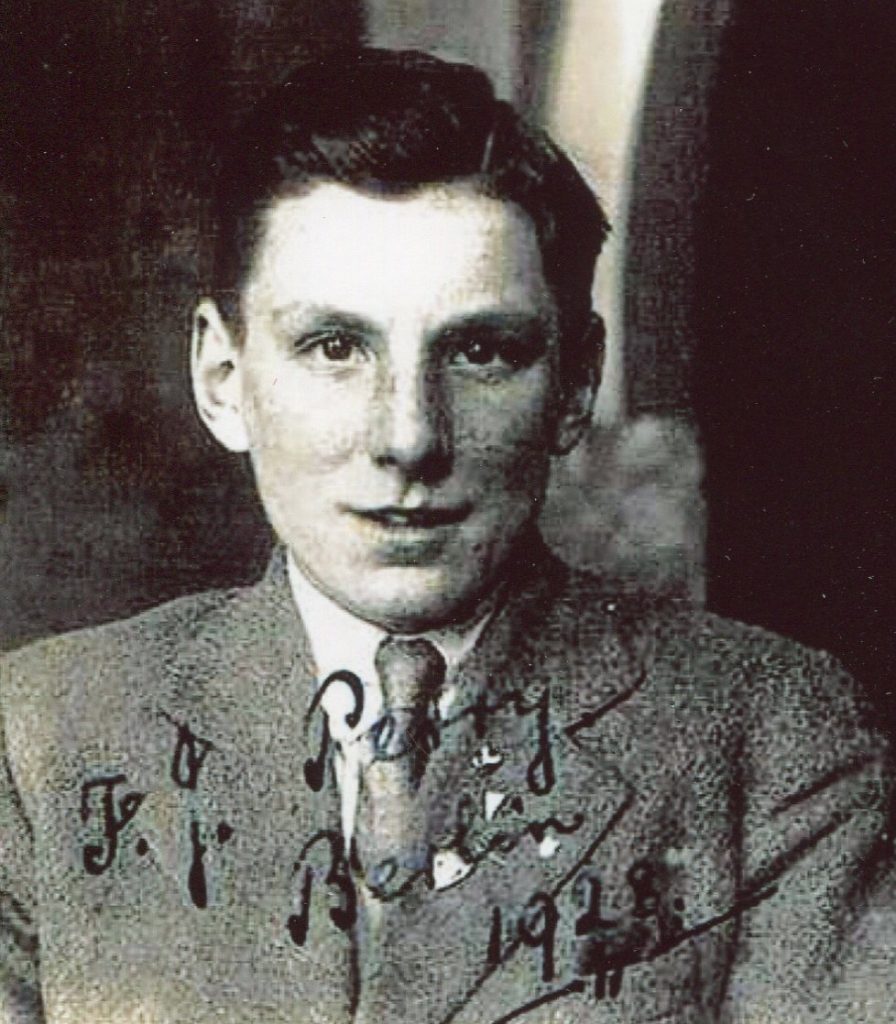
Fred Perry: Born on 18 May 1909 in Stockport, Lancashire. How did Fred first start to play table tennis? An old school friend, Margot Reading, explained in an article in the Daily Express dated 5 July 1989 how 70 years earlier when she was nine years old, she invited a school friend at Drayton Green School to play table tennis with her at her home in Ealing. The name of the friend – Fred Perry. It was the first time Fred had picked a bat up and Margot says he “took to it rather well”. She also remembered him as her dancing partner on Mayday and the back half of a theatrical cow. More about Perry in our next feature.
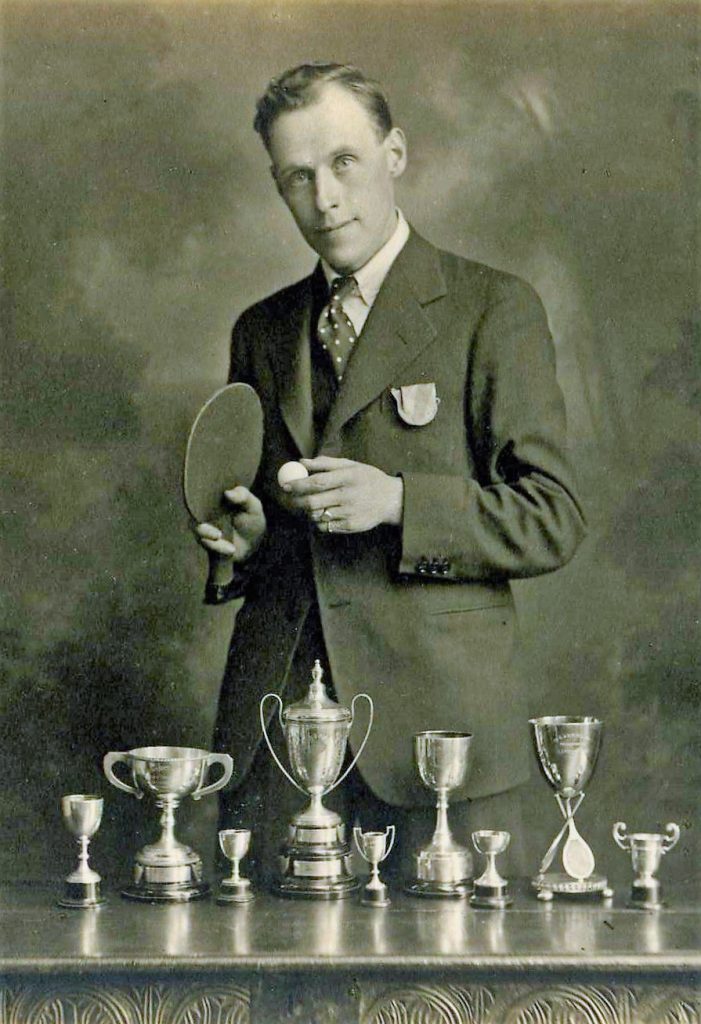
Teddy Stillwell: Albert Edward Stillwell, known as Teddy, came from Luton where he was born on 19 February 1902. Teddy played in the first three World Championships as an individual entrant. He did, however, become an England international gaining two England caps against the Irish Free State and All India. Teddy was an England representative at Stockholm Congress in 1928 and again in Budapest the following year. He died in Luton on 28 December 1946.
Joan Ingram: A member of the Herga Club in Middlesex, Joan was born on 28 February 1910 in Harrow. She played in the 1926, 1928 and 1929 World Championships but as there were no Women’s Team events at any of these she had to enter in her own right. Ingram attended the Stockholm Congress representing England. She played in a number of Open tournaments at home and also in the German Open in 1928 where she reached the semi-finals of the Ladies Singles and the same stage in the Mixed Doubles with Charles Bull. At the English Open in 1926 she gained two doubles titles with Dolly Gubbins and Lionel Farris. She also won several Open and Closed titles in England. Ingram gained one England cap when she played against Wales on 7 February 1920, a fixture England won 6-4. Her world ranking was five in 1928.
As well as being a table tennis international, Ingram was another multi-sports player as she represented England in the Wightman Cup, playing in Forest Hills in 1937. She played at Wimbledon from 1927-47 with her first success in the Junior Mixed Doubles in 1927 with Richard ‘Dickie’ Ritchie. It was two semi-final places in the Women’s Doubles, in 1936 and 1927, in the latter she and her partner were seeded fourth. It was another semi-final placing in 1934 in the Mixed Doubles with John Olliff and a quarter-final position with her sometime table tennis doubles partner, Frank Wilde.
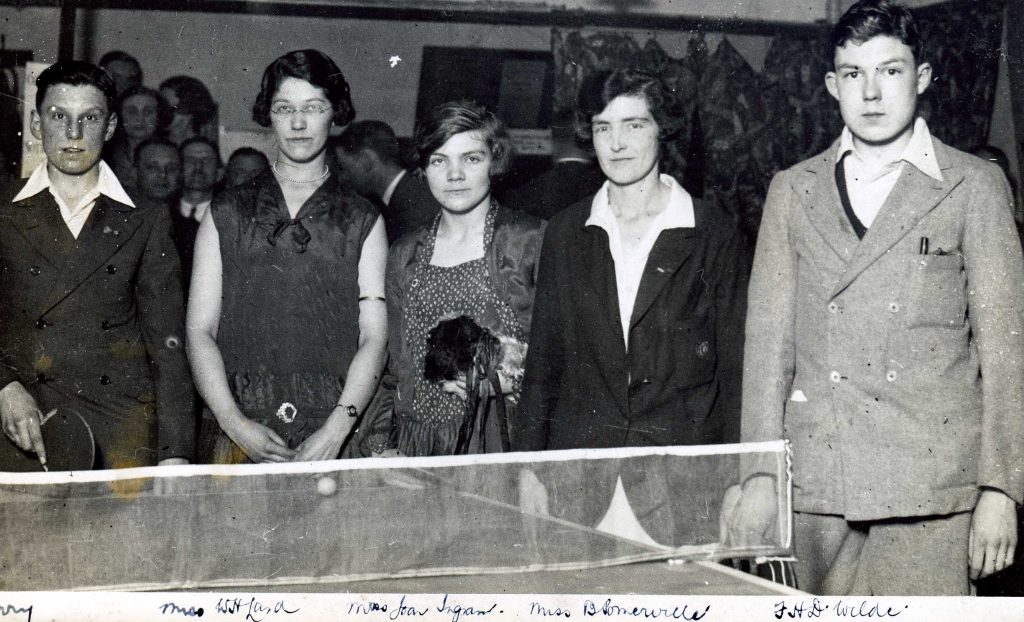
Winifred Land: Another member of the Herga Club, Winifred otherwise known as Winnie or Wendy, was another lady born in 1902, in Wandsworth, London. She played in the first two World Championships and in Stockholm represented England at the ITTF Congress. An England international who played against Wales in 1930, winning her singles match and doubles with Brenda Somerville in England’s 6-4 victory. Ranked eighth in the world in 1928.
Land had great success in the English Open winning two Women’s Doubles titles and the Mixed Doubles with Fred Perry. A runner-up in the Women’s Singles in 1929/30 along with five semi-final places put her in the top echelons in the late 1920s. Land won over 20 Open titles in total.

Brenda Somerville: Brenda Somerville was born in 1901 in Liverpool and later lived in Harrow, London. Stockholm was the sole World Championships she played in, she was another England representative at the Congress. Somerville gained one international cap when she played against Wales in 1930. She was a member of the famous Herga Club, the venue for some of the first World Championships matches. At the English Open in 1928 she won the Women’s Doubles with Wendy Land. Somerville was still playing when she was 51, however, table tennis wasn’t the only sport that Somerville took part in as she was also a keen fencer along with her husband, Victor Warner.
Latest news
- British Clubs Leagues
YBCL trophies change hands as Grantham College and Fusion rise to top
- British Clubs Leagues
Ormesby maintain title charge as penultimate weekend shapes the table
- WTT events